



Experience
Over 20 years of service and more than 100 years of combined experience from our staff.


Nobody wants to pay extra money to the IRS, especially as retribution for something their spouse was responsible for. If the IRS holds you accountable because your spouse or former spouse made mistakes on your joint tax return, you can fight back.
The knowledgeable tax professionals at Polston Tax Resolution & Accounting can help free you from unjust tax obligations.
The IRS Innocent Spouse Relief provision is a valid legal option that can correct your tax concerns. Our tax attorneys and other tax specialists work with you from the moment you reach out until we achieve the best outcome for your situation. Let us guide you through this complicated situation and protect your finances. Contact us for a free tax relief consultation.
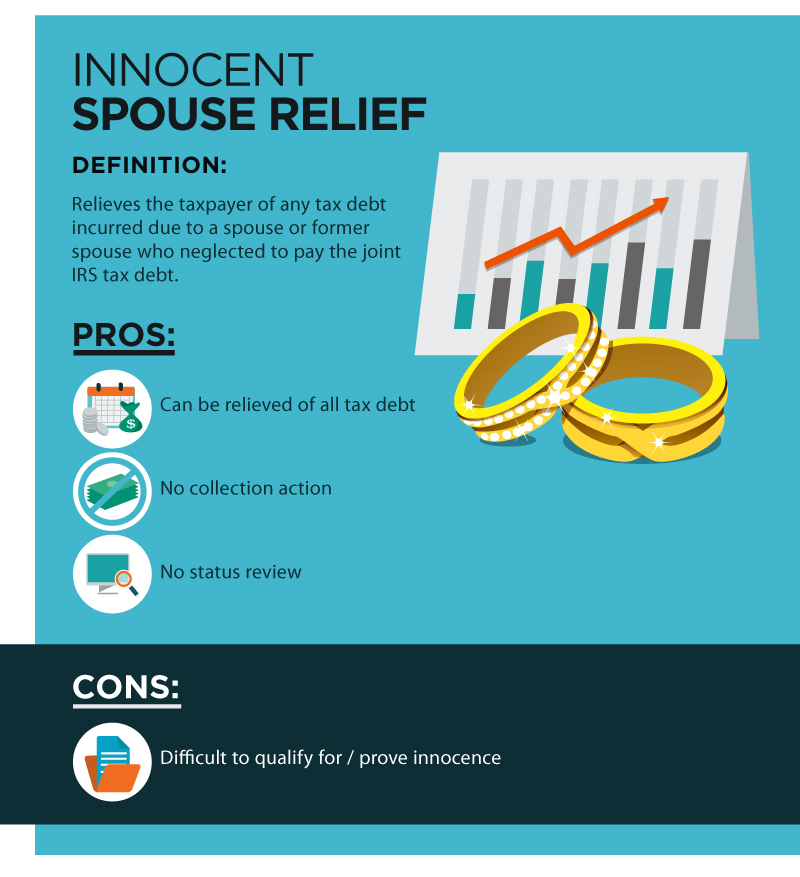
Unpaid taxes can take a significant toll on your finances — but what if the taxes owed aren’t yours? Innocent spouse relief is an IRS program that can negate your liability if you owe taxes because of a spouse or former spouse. Whether it’s an unpaid tax balance, penalties or interest, this provision is designed to release you from liability.
Even if you jointly filed your taxes as married, you shouldn’t be held responsible for your spouse’s missteps. Maybe they failed to report or misreported their income. They may have claimed tax credits incorrectly or omitted items on a tax return. Perhaps their business failed.
Whatever the reason, qualifying for innocent spouse relief can provide tax relief and financial protection from any owed taxes brought on by your spouse’s neglect of their tax obligations.
There are a few conditions you must meet if you wish to apply for innocent spouse relief:
If both of these statements are true, It would be unjust and undeserved to hold you liable for the outstanding tax balance.
There are several scenarios where someone might seek innocent spouse relief:
These are just a few ways you may qualify for IRS innocent spouse relief, a program designed to negate any liability for taxes owed by a former or current spouse.
Although married couples agree to pay all taxes, penalties and interest due on a joint return — even if they get divorced or reach a settlement agreement — certain provisions protect one spouse from another if they make significant mistakes. In addition to innocent spouse relief, separation of liability and equitable relief may also be options.
There is only one way to know for sure if you qualify. Contact Polston Tax today to learn more about innocent spouse relief. We can review your case for free and guide you on your best course of action, including whether you qualify for liability relief.

While the requirements for innocent spouse relief may appear relatively simple, it can be challenging for taxpayers to prove their innocence and ultimately qualify for assistance. However, with the help of our certified tax attorneys, you can get the relief you deserve. When you come to us for innocent spouse tax services, we’ll create an individualized solution to help you mitigate your tax liability issues in a way that works in your favor.
At Polston Tax, we work with the IRS every day. That means we know what to expect and how to deal with them. With our highly knowledgeable team on your side, you’ll never have to face the IRS alone.




We make our process as easy and straightforward as possible for our clients.
Learning how to successfully qualify and file for innocent spouse tax relief can be challenging. That’s why it’s wise to invest in services from skilled and experienced tax attorneys when handling your case.
Relying on Polston Tax for innocent spouse relief services means having a team of tax professionals in your corner who will work together to help you attain the tax mitigations you deserve. We strive to transfer the weight of your tax troubles from your shoulders to ours.
Over 20 years of service and more than 100 years of combined experience from our staff.
Our highly skilled team of over 100 case managers, financial analysts, tax attorneys and other tax professionals.
Numerous awards and features on major media outlets.
Our dedication to giving back to the local community.

If you have been wondering which tax relief firms specialize in innocent spouse relief? You have come to the right place! You can file for innocent spouse relief with professional assistance from the skilled attorneys at Polston Tax. We do what it takes to help our clients with outstanding tax payments and ensure they stay that way.
If you are looking for tax relief firms specializing in innocent spouse relief, contact Polston. Call us today at 844-841-9857 to schedule a free consultation, or fill out our contact form below.
There is a two-year statute of limitations from the date the IRS first attempted to collect the tax debt. This means you have two years from the date shown on the IRS’s first collection notice to file your innocent spouse relief request. Missing this deadline is grounds for automatic denial, so timing is critical.
If denied, you have several options:
– Request to speak with the IRS agent’s manager for reconsideration
– Appeal through the Collection Appeals Program
– Request a Collections Due Process (CDP) hearing
– Contact the Taxpayer Advocate Service for assistance
– File a petition with U.S. Tax Court
– Consult with a tax professional about alternative relief options
No. The IRS does not allow you to pursue both remedies simultaneously. If you’ve already settled your taxes with an Offer in Compromise (OIC) for that tax year, you cannot also file for innocent spouse relief. You must choose one option or the other.
Innocent spouse relief removes you from liability for the tax debt, so it should not negatively impact your credit in the way the original tax liability would. However, the underlying tax issue and any liens or levies that were placed before your relief was granted could still affect your credit history. Once relief is granted, those collection actions should stop.
You don’t need your spouse’s cooperation to file for innocent spouse relief. The IRS investigates your claim independently. However, you’ll need to gather as much documentation as possible yourself—bank statements, tax records, business records, etc.—to prove your case. If your spouse claims you did know about the errors, the IRS will weigh the evidence, and having strong documentation supporting your position is crucial.