


Construction companies operate in a fast-moving, margin-sensitive industry where payment delays or mismanagement can lead to legal exposure, tax issues or broken vendor relationships. Strong accounts payable (AP) practices help firms manage cash flow, stay compliant and build long-term project stability.
Improving AP in construction requires careful change management, training and policy enforcement. While it is crucial to understand how to improve these processes, it is also essential to partner with a qualified tax and accounting bookkeeper who will bring structure, accuracy and accountability to AP processes.
In the construction industry, AP refers to the money a prime contractor or construction company owes subcontractors, suppliers, equipment rental companies and other vendors. These obligations are recorded as current liabilities on the company’s balance sheet and are a central component of project management, cash flow control and overall financial health.
Construction companies often front labor and material costs before receiving owner payments. Poor AP processes, such as paying too early without reimbursement or too late, leading to vendor disputes, can create cash shortages. These challenges directly affect the ability to fund future work phases, lease equipment and pay crews.
Late or improper payments can cause issues with compliance and tax considerations. These include Form 1099-NEC filings, sales and use tax tracking, alongside the Internal Revenue Service (IRS) audits. According to IRS regulations and state taxing entities, accurate vendor classification and timely reporting are required to avoid penalties.
Construction businesses must correctly apply state sales and use tax rules on materials, services and equipment rentals, which vary by project and jurisdiction. This requires careful management to maintain compliance, protect cash flow and avoid legal disputes. Unique challenges include:
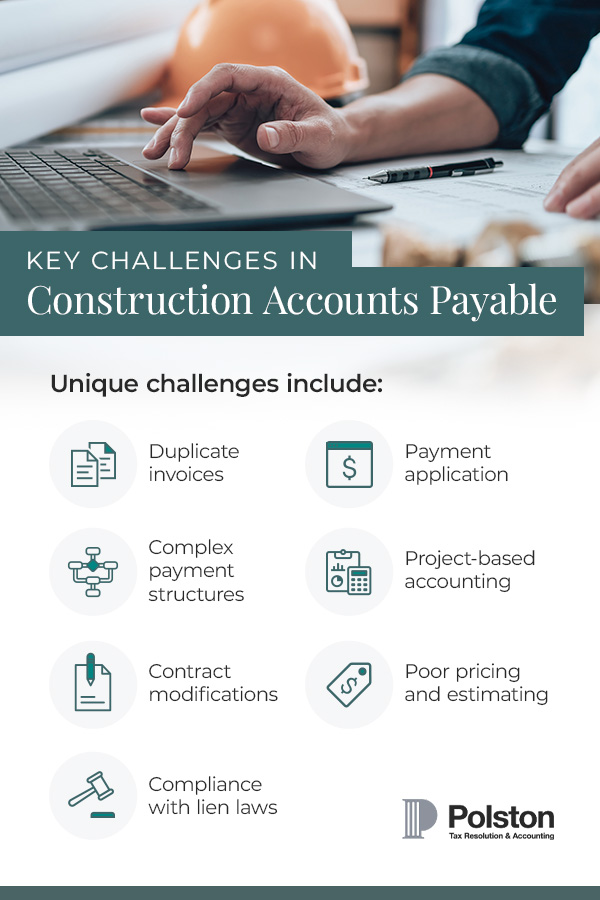
Efficient AP processes reduce payment delays, minimize errors and improve vendor relationships. These benefits are key in an industry where strong subcontractor ties directly affect project timelines and quality. Automation and standardization of invoice reviews, approval and payment reduce the risk of duplicate payments, overlooked discounts and noncompliance with contract terms. Timely, accurate payments also support lien law compliance by ensuring proper documentation and preventing disputes.
From a financial standpoint, streamlined AP improves cash flow visibility, allowing construction firms to forecast obligations more accurately and make informed decisions about resource allocation. It also reduces administrative overhead, freeing internal teams to focus on higher-value tasks such as vendor negotiations or project cost control. Additionally, improved internal controls help safeguard against fraud and bolster compliance with IRS reporting and state tax rules on deductions, sales tax and vendor classification.
Improving AP in construction requires more than faster payments. It demands a strategic approach that aligns financial processes with project execution. These strategies help construction firms reduce risk, maintain tax compliance and improve overall financial health:
Manually keying invoices, printing checks, and tracking approvals with email or spreadsheets slows down payment cycles and increases exposure to fraud and compliance risks.
Automation improves efficiency while reducing manual data entry and minimizing human error, and accelerates invoice approval cycles. Automating check runs, automated clearing house (ACH) payments and document archiving reduces time spent on repetitive tasks and improves audit readiness. It also helps maintain vendor records needed for year-end reporting. Implement automation software that:
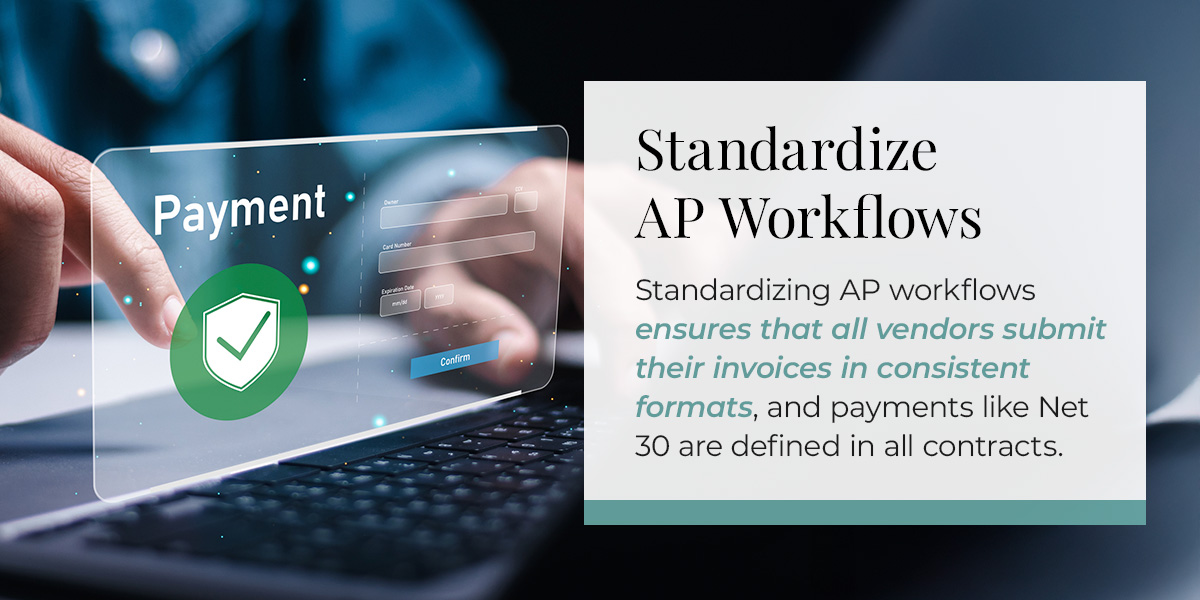
Subcontractors and suppliers often submit invoices in different formats and through various channels — email, paper or PDFs. Additionally, inconsistent invoice approvals, unclear payment terms and poor documentation expose construction firms to errors and liability. This delays approvals, increasing the risk of duplicate payments, missed deadlines and lost documentation.
Standardizing AP workflows ensures that all vendors submit their invoices in consistent formats, and payments like Net 30 are defined in all contracts. Establishing a written AP policy accompanied by staff training offers transparency that supports legal compliance. It also ensures that approval chains are documented and followed for all disbursements. These processes also aid in W-9 and lien waiver collection and storage.
Manual invoice data entry into separate systems causes discrepancies in job budgets, missed expense tracking and inaccurate financial reporting. AP must closely align with job costing and project management tools. Integration with construction management software like Sage, Procore or Viewpoint enables:
This integration ensures expenses are tracked in the right tax year and project, preventing errors in financial statements or Schedule C filings. It also helps meet Generally Accepted Accounting Principles (GAAP) and IRS substantiation standards.
Strong vendor management helps control costs, prevent fraud and maintain supply chain stability. Construction businesses should collect and verify W-9 forms before issuing payment. It is also crucial to keep updated insurance certificates and contractor licenses and enforce consistent terms with signed lien waivers for every payment. Prompt and accurate payments build trust, reduce disputes and minimize the risk of mechanics’ liens, which is especially important under lien laws. Efficient vendor onboarding also supports clean year-end 1099-NEC reporting.
Use this checklist during vendor onboarding to prevent compliance issues:
Regular performance monitoring helps uncover inefficiencies, prevent cash flow problems and identify tax risks. Tracking key metrics like days payable outstanding (DPO), invoice exception rates, payment processing cycle times and early payment discounts captured helps with AP performance monitoring. Use dashboards and monthly reports to review outstanding liabilities. Reconcile payments regularly and match them to bank statements, contracts and tax records. These measures help improve transparency and help prepare accurate reports for the IRS and state taxing entities.
Involve users early in the technology selection process, providing clear demonstrations that show how automation reduces workloads without replacing key staff roles. Offer hands-on training, quick reference guides and ongoing support, starting with a pilot program on one project before going company-wide. These are necessary steps, as field staff and accounting personnel may resist new systems due to fear of disruption, lack of training or perceived complexity.
Additional change management solutions include:
Jobsite teams often fail to communicate pending approvals or missing paperwork back to the accounting department in a timely manner, causing delays. To facilitate better communication, use cloud-based systems accessible from both the field and the office. Implement mobile apps for invoice review and approvals, and set weekly sync meetings or reporting checkpoints for active jobs. Bridging the communication gap ensures invoices are promptly approved and expenses are booked in the right reporting period.
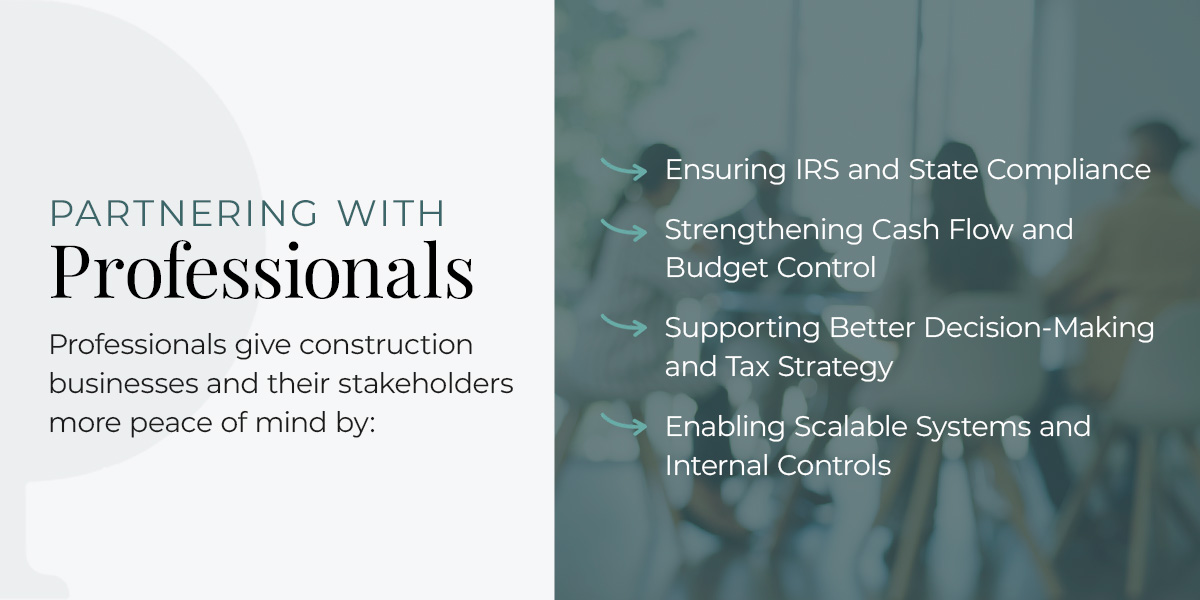
Partnering with professional accounting and tax resolution services is a critical but often overlooked strategy for improving AP in construction. It is an especially helpful tool to improve accuracy and reduce errors in vendor invoices, change orders and job cost allocations. Professionals give construction businesses and their stakeholders more peace of mind by:
They understand state and federal tax rules that apply to contractor payments, 1099 filings, sales and use tax, and lien documentation, ensuring:
Construction cash flow is often unpredictable. A bookkeeper provides consistent oversight by preparing AP aging reports and cash requirement forecasts and helping to prioritize payments based on lien exposure or contract timelines. They will also advise when to defer non-critical payments or take early payment discounts. With real-time insights, a project manager can make informed decisions that protect the company’s financial health.
A professional bookkeeper with construction industry experience works in tandem with certified public accountants (CPAs) and tax attorneys to:
This collaboration ensures AP data supports the company’s tax position and long-term planning.
As construction firms grow, manual AP processes break down. A professional bookkeeper helps set up scalable systems that support automation and integration. They also draft or refine AP policies and internal controls, offer staff training on best practices and enforce compliance standards. This creates an infrastructure that supports growth without increasing risk.
Polston Tax has been solving business tax problems since 2001, and that includes offering our clients bookkeeping and accounting services for construction businesses to streamline AP. When you partner with us, your business gets professional services that include taking charge of:
Our skilled construction accountants and tax attorneys have helped businesses navigate complex financial situations and we’ve saved millions of dollars for our clients. This has allowed us to grow into offering nationwide tax services. This development allows us to offer each client customized solutions, ensuring we fully meet each business’s unique needs.
Effective AP management in construction is integral to protecting project timelines, preserving working capital and avoiding legal or tax liabilities. Companies must maintain accurate records, enforce internal controls and coordinate closely with project teams to ensure timely and compliant payments.
At Polston Tax, we assist with more than AP solutions. Our network of CPAs and tax attorneys has extensive experience in financial matters relating to the construction industry. We help you maximize tax returns, offer audit representation, and help with your tax planning and record-keeping. By partnering with us, your financial reports will see improved accuracy through precise accounting records that follow specific practices for reporting deferred and partial payments. Let us improve your business’s AP processes today.
Get your free consultation today and see how Polston Tax can help streamline your business’s accounting and compliance.