


Summary: This article outlines the process and available options for resolving tax problems with the IRS. It emphasizes that the initial step involves understanding the tax issue and ensuring all required returns are filed. Key insights detail various resolution programs: installment agreements for structured payments, Offers in Compromise for settling debts at a reduced amount due to financial hardship, and Currently Not Collectible status for those facing severe economic distress. The article also covers penalty abatement and the importance of proactive communication with tax authorities. It stresses that the IRS conducts a thorough financial analysis to determine eligibility for these options, strongly recommending professional representation to navigate the complex process and negotiate effectively on the taxpayer’s behalf.
Opening an envelope from the IRS or a state taxing entity can send your stress levels soaring. Whether it’s a notice about unfiled returns, unpaid taxes or an upcoming audit, the weight of outstanding tax feels overwhelming.
Tax resolution is the formal way of addressing and settling your tax issues with the IRS or state taxing entity. While it may seem complicated, the path is structured. While the process is similar, state tax agencies often have different programs, timelines and enforcement procedures than the IRS.
Understanding the tax resolution process can reduce anxiety and help you prepare for what’s ahead. From investigation to final settlement, professional guidance makes all the difference in securing the best possible outcome.
Working with the IRS or state taxing entity lets you resolve unpaid taxes and arrange manageable payments. It’s designed to help taxpayers who owe back taxes find a path forward without facing the full force of government collection actions.
Common situations that lead to needing tax resolution include unfiled tax returns, large tax balances, payroll tax issues or life disruptions that prevent timely tax compliance. Ignoring the IRS or state taxing entity only makes matters worse. The consequences of inaction are serious and can include:
The longer you wait, the more penalties and interest accumulate, and the more aggressive collection actions become.

While each case is unique, IRS back taxes follow a step-by-step path. Here’s how the tax resolution process works:
Your tax situation requires a thorough investigation before any resolution can begin. Contacting the IRS to obtain a complete record of your account is essential to understanding which tax years you owe on, the total amount owed, any penalties or interest applied, and whether the IRS has assigned a revenue officer to you.
Tax law is complex, and IRS procedures are unfamiliar to most taxpayers, who don’t encounter them in daily life. The Taxpayer Bill of Rights guarantees you certain protections during this process, but successfully invoking it requires expertise. A qualified tax professional will conduct a full analysis of your account transcripts, identify potential issues and develop a strategy tailored to your financial circumstances. Depending on the complexity of your case, the overall tax resolution process can take anywhere from a few weeks to several months or longer.
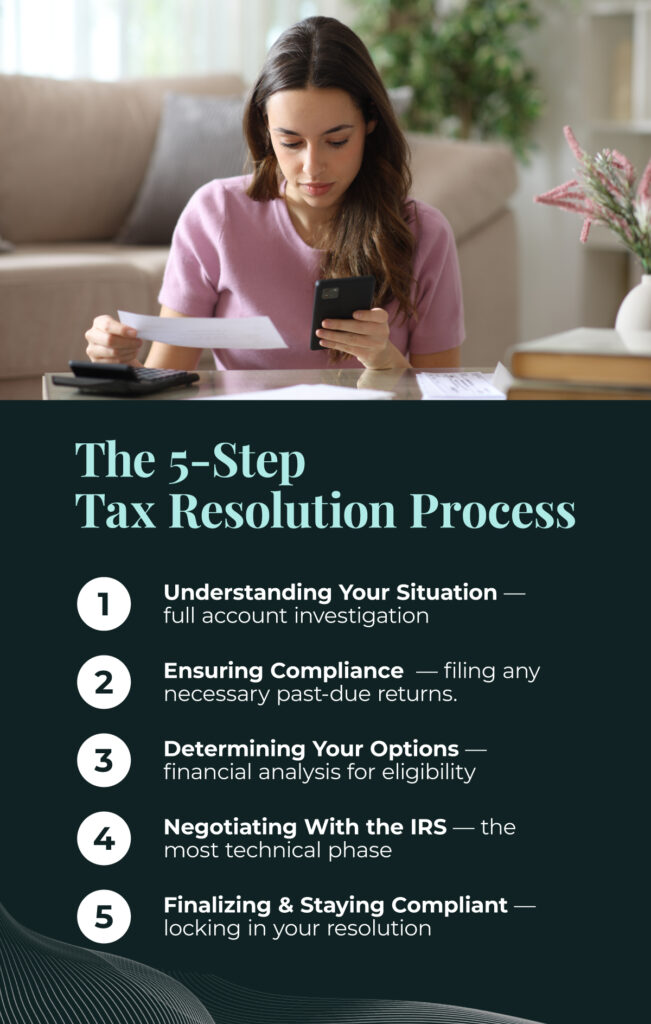
Before the IRS will negotiate any resolution, you must be in full compliance and file all past-due returns. The IRS will not consider options like an Offer in Compromise (OIC) or an Installment Agreement if you have outstanding returns.
Achieving compliance can feel daunting, especially if you’re missing records or unsure how to reconstruct your past financial information. A tax professional can help you gather the documents needed for the tax resolution process, prepare accurate returns and get them filed efficiently so you can move forward to the next stage.
Once you’re compliant, the focus shifts to identifying the most viable resolution options based on your unique financial situation. The best resolution option depends on factors like your ability to pay, current income, monthly expenses and asset equity.
A financial analysis determines what you can afford and which IRS programs you qualify for. A tax professional will review your complete financial picture and recommend the resolution path that offers the most favorable outcome — whether that’s settling for less than you owe, spreading payments over time or seeking temporary relief from collection.
Negotiation with the IRS is the most technical phase. Detailed financial documentation is required, and any mistake can delay or jeopardize your case.
Professionals who handle these cases regularly understand IRS financial standards. They know how to present your case persuasively and can navigate the bureaucracy efficiently.
Receiving your agreement in writing from the IRS and understanding the terms you must follow to avoid defaulting completes the formal resolution process. Many resolutions come with ongoing compliance requirements. For example, Offer in Compromise agreements require taxpayers to remain compliant with all tax laws for five years.
Failing to meet the terms of your resolution can result in the IRS revoking the entire agreement.
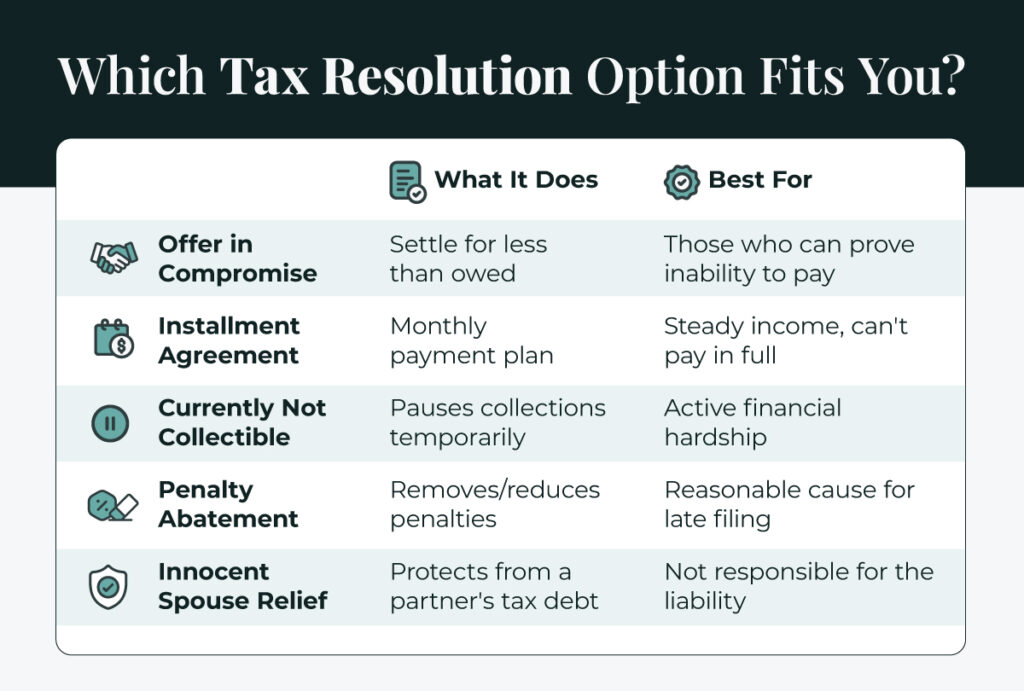
Tax authorities may offer several resolution programs to help taxpayers settle their tax balances, though availability varies by jurisdiction. Here are the most common options:
Polston Tax Resolution & Accounting has been helping taxpayers resolve their issues for over 20 years, bringing together attorneys, CPAs and case managers who work as a team on each case. From initial investigation through final settlement and beyond, our team handles your case from every angle — legal, financial and procedural.
Decades of practice give us an understanding of IRS procedures, realistic expectations for different financial situations and established relationships with IRS personnel. We’ve seen thousands of cases and can anticipate challenges before they arise, streamlining the entire process.
Thousands of taxpayers face tax debt — and navigate tax resolution processes to settle matters. Partnering with a reliable tax practitioner can set you up for a successful resolution.
Polston Tax Resolution & Accounting has been helping taxpayers resolve their tax issues since 2001. Our team works together to handle every aspect of your case, from the initial investigation to final settlement and beyond. We’ll communicate with the IRS or state taxing entity on your behalf, so you can focus on moving forward.
Ready to take control of your tax situation? Schedule a free consultation with Polston Tax Resolution & Accounting today and discover your path to resolution.