
Summary: This article explains how to claim a refund for tariffs paid under Section 301 of the Trade Act of 1974 (IEEPA) following a Supreme Court ruling. This article highlights that businesses that imported goods subject to these tariffs may be eligible for a refund. It details the process for filing a claim with U.S. Customs and Border Protection (CBP) and the documentation required. This article emphasizes the importance of acting promptly, as there may be deadlines for filing claims. Businesses should review their import records and seek professional guidance to determine their eligibility for a refund.
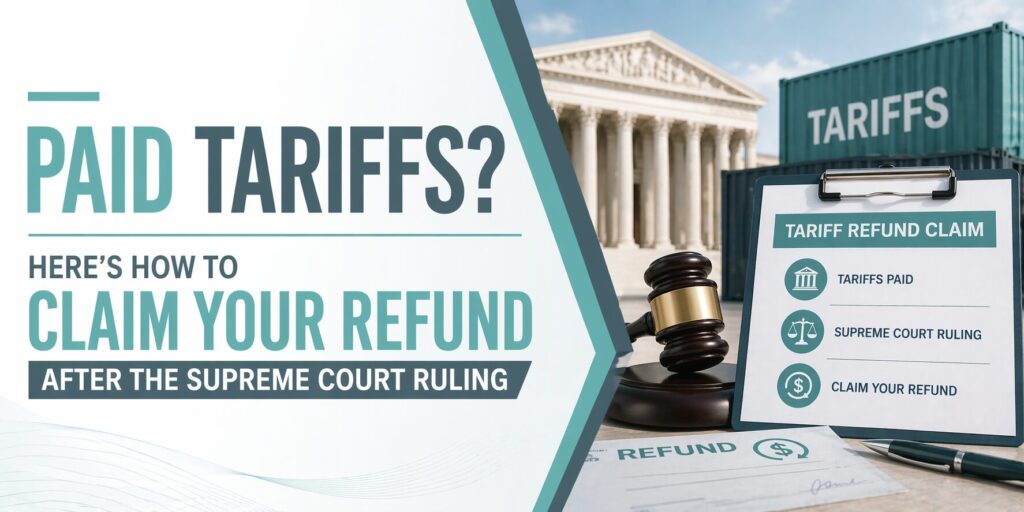
In recent IEEPA tariff news, the Supreme Court has made a new ruling on these tariffs. This ruling means businesses that paid tariffs imposed under this act may now be eligible for a refund. The U.S. Customs and Border Protection (CBP) began accepting claims on April 20, 2026. Make sure you know if you’re eligible and the process you can use to recover these funds.
IEEPA tariffs are those imposed using the 1977 International Emergency Economic Powers Act (IEEPA). This act is intended to address national emergencies by regulating importation. President Trump used this act to impose certain tariffs, including Trafficking and Immigration Tariffs and Reciprocal Tariffs on imported goods.
On February 20, 2026, the Supreme Court ruled that President Trump’s tariffs under that act were unlawful because the act doesn’t authorize the president to impose tariffs. This ruling means your business may be eligible for refunds if you paid these tariffs.

Following this IEEPA tariff news from the Supreme Court, here’s what you can do to secure your refund:
While you can submit all declarations together, you can only get refunds on certain entries during the initial phase. If your entries fall outside of those areas, you won’t get a refund right away. In these complex cases, the next options would be:
While you may be eligible for refunds, securing them can be challenging. Polston Tax may be able to help. We can determine eligibility for the first phase and assist you with portal applications. If your refunds don’t fall under the first phase, we can explore alternative legal methods to recover the funds you’re owed, such as CIT lawsuits. After you secure your refunds, we can help with tax planning to help you keep more of what you recovered.
Learn more about our IEEPA refund services or contact us online.