

Summary: This article discusses tax credits available to support public safety initiatives. It highlights that certain tax credits may be available to businesses or organizations that invest in public safety-related activities, such as security measures or training programs. This article emphasizes the importance of understanding the eligibility requirements for these credits and properly documenting expenses. These credits can incentivize investments in public safety and provide valuable tax savings.
For public safety, first responders risk everything. Police officers, firefighters and medics place themselves on the front line and uphold their duty of serving civilians with lifesaving and protective services. They should be honored for the sacrifices they make every day to defend and protect.
In gratitude and support of these public service officers (PSOs), the U.S. Congress offers tax benefits to help alleviate financial hardships that may arise in the line of duty. If you’re a working or retired PSO, you’re eligible for these benefits. This guide covers the various tax credits and deductions, the qualifying criteria and claim processes.
As defined by the Internal Revenue Service (IRS), a qualified public safety officer is anyone who works for a state or local government and provides police protection, firefighting services or emergency medical services within their jurisdiction.
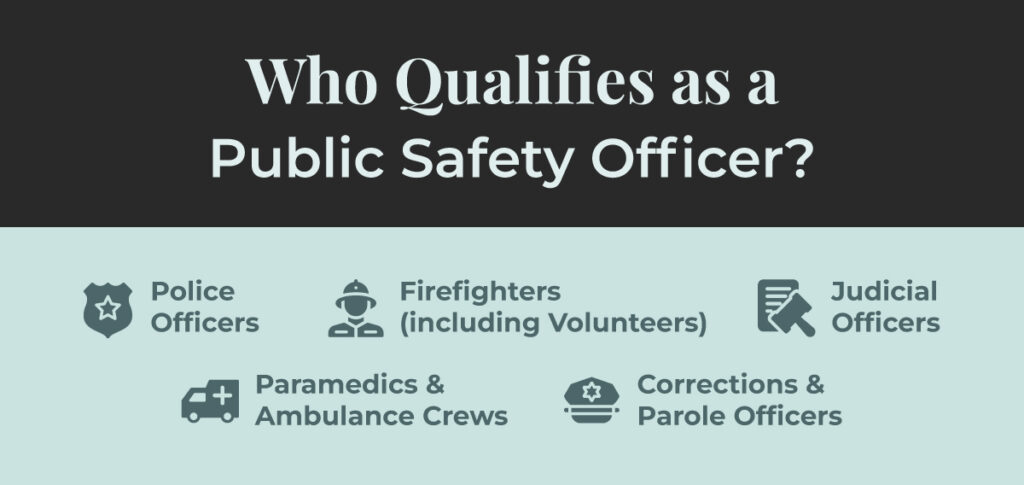
This definition also includes federal and nonfederal roles, such as:
Essentially, the IRS considers a public safety officer to be a first responder who provides emergency response, disaster control and public safety laws. If you’re part of this industry, you’re entitled to various public safety tax credits and deductions.
To show appreciation for everything you do as a first responder, the U.S. tax code provides PSOs with unique tax benefits to ensure financial stability and coverage when you need it most. Here are credits and deductions to consider.
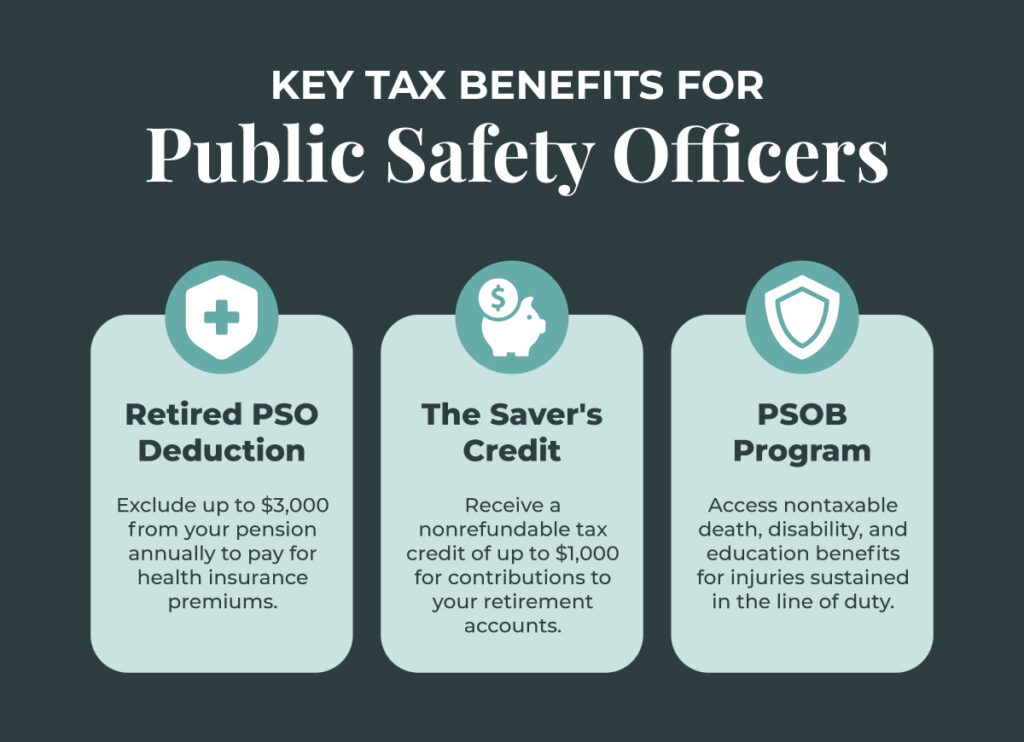
Fulfilling a dangerous job description sometimes leads to injury, disability and even death. To support PSOs who have fallen or become disabled in the line of duty, the PSOB program provides nontaxable death, disability and education benefits. These benefits provide financial relief to surviving officers and their families.
In 2022, this program was expanded to cover specific mental health conditions such as post-traumatic stress disorder (PTSD), acute stress and trauma-linked suicides with the Public Safety Officer Support Act of 2022. This bill allows PSOs who are permanently and totally disabled due to work-related trauma, PTSD or attempted suicide to seek disability benefits.
To claim this benefit, the following criteria must apply:
To make a claim, you need to follow the application process outlined by the U.S. Department of Justice Bureau of Justice Assistance (BJA).
Under the Healthcare Enhancement for Local Public Safety (HELPS) Act, retired PSOs can exclude up to $3,000 of their pension distributions from taxable income annually to help pay for health or long-term care insurance premiums paid for healthcare for a retired PSO, their spouse and dependents.
Previously, these distributions were the responsibility of retirement plan administrators. But now, with the Secure Act 2.0, retirees can make these distributions directly to their insurance providers, up to the amount of their premium.
To be eligible for this benefit, you need to fit the specific criteria, including:
To claim the retired public safety officer tax deduction, you need to verify your eligibility from the criteria above and record your insurance premiums. Then arrange with your pension plan to have these premiums paid directly from your pension distribution. During tax time, report the payments on IRS Form 1040 with the total distribution from your pension. Ensure that you keep records of these payments as proof.
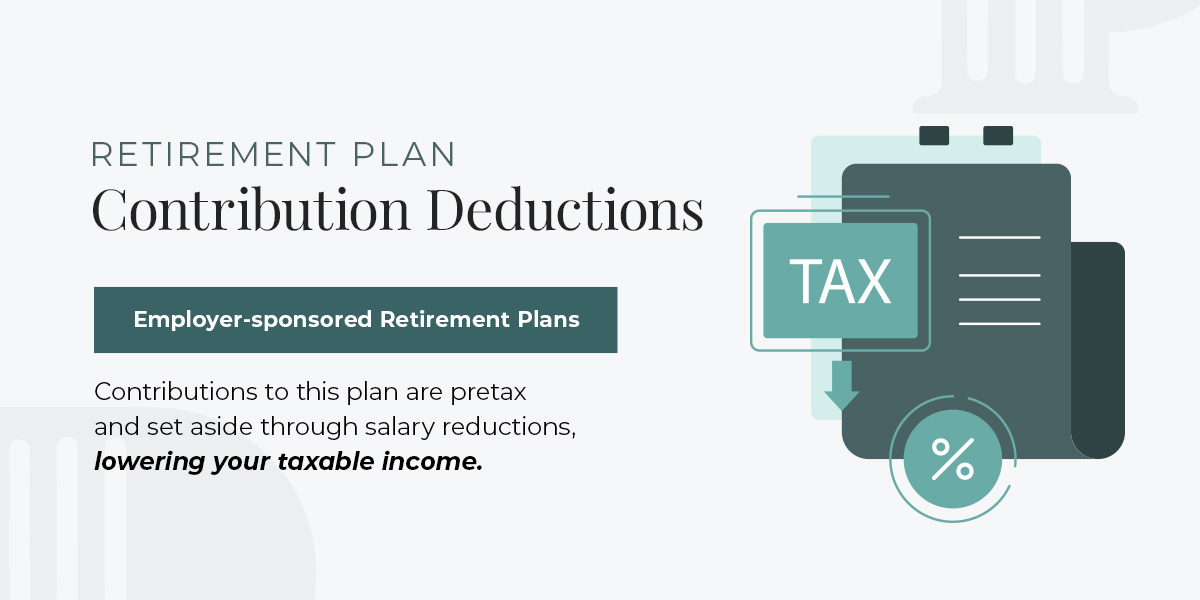
Public safety officers can join employer-sponsored retirement plans with tax advantages. These plans are specifically for state government employees, including the 457(b) retirement plan. Contributions to this plan are pretax and set aside through salary reductions, lowering your taxable income. However, these contributions may grow until you take withdrawals at retirement. When you withdraw funds, you’ll pay tax on the amount you use.
To qualify for the retirement plan contribution deductions, you need to be a state government employee at a tax-exempt organization. Unlike a 401(k) and 403(b), there’s no 10% early withdrawal penalty, regardless of your age. However, early access to these funds is only permitted under certain circumstances, such as leaving the service, an unexpected emergency or death.
You may also be eligible for the Retirement Savings Contributions Credit, also called the Saver’s Credit. This credit encourages you to contribute to your retirement through incentives. This is a nonrefundable tax credit of up to $1,000 for contributions to retirement accounts, such as individual retirement accounts (IRAs), 401(k)s or Achieving a Better Life Experience (ABLE) accounts. Based on your filing status and adjusted gross income (AGI) reported on your Form 1040, you may qualify for a credit of 10%, 20% or 50% on the first $2,000 in contributions.
You’re eligible for this credit if you’re:
As an added benefit to the public safety industry, first responders also receive nontaxable health and disability benefits during their employment. This is an employer-sponsored benefit to ensure your health care is covered in the event of sickness or injury while performing your duties to the community.
These benefits compensate for illness, wounds and disability pensions before retirement caused by an injury while on the job.
Law enforcement tax deductions can also include unreimbursed work-related expenses. This includes uniforms, equipment, personalized training and education required to perform their duties. The Tax Cuts and Jobs Act applies through tax year 2025. After this year, these itemized deductions are no longer deductible, meaning they must be paid by the department or treated as business expenses.
To claim reimbursement of your work-related expenses, keep all dated receipts as proof when you’re completing your federal and state taxes.
To thank you for your service and sacrifices in keeping citizens safe, these tax credits for law enforcement, emergency services and firefighters offer financial relief. They help support you and your family, allowing you to enjoy life unburdened. And if you need any assistance in seeing whether you qualify for any of these benefits, we’ll be happy to guide you.
At Polston Tax, we’re dedicated to providing public safety tax services to help first responders understand and navigate their obligations. Let us assist you in preparing your tax returns with our experience and dedicated team, offering you financial peace of mind.
To schedule a free consultation, fill out our contact form, and we’ll be in touch.