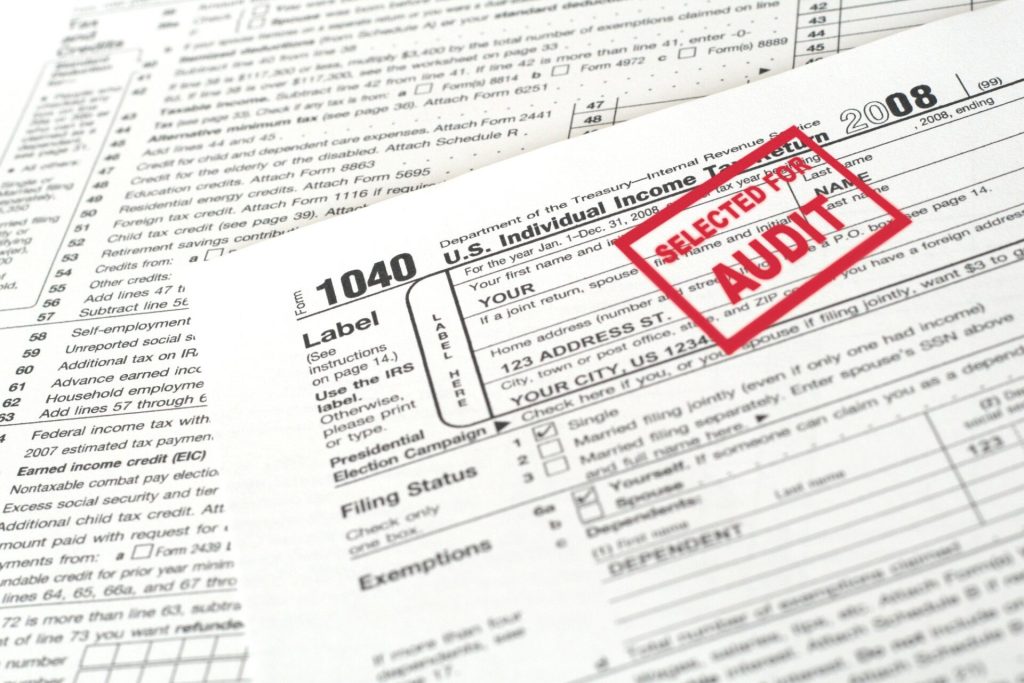


Summary: This article offers advice on how to minimize the risk of an IRS audit. Key strategies include filing accurate tax returns, reporting all income, and claiming only legitimate deductions. Common red flags that trigger audits include unusually high deductions, discrepancies between reported income and information received by the IRS, and claiming business losses year after year. This article emphasizes the importance of maintaining thorough records to support all claims made on the tax return. While avoiding an audit entirely isn’t guaranteed, careful preparation and adherence to tax laws can significantly reduce the chances of being selected.
Tax season can fill business owners with dread. With so many forms to fill out and receipts to collect from the past year, it’s common for people to worry about doing something wrong. There’s nothing worse than a simple mistake triggering an IRS audit. The majority of audits are due to small, avoidable errors when filing your tax returns.
Business owners have enough to worry about. Finding ways to avoid being audited by the IRS can feel overwhelming at first, but it doesn’t have to be so daunting. It just requires some insight and guidance. How can you avoid an IRS audit entirely? Let’s turn this complex matter into simple, actionable tips.
The odds of getting audited are generally quite low, but an individual’s odds depend on several factors. The most recently available IRS Data Book confirms that audit rates are historically low, though this isn’t necessarily the case for everyone. Targeted audits for business owners and high-earning individuals are on the rise.
While less than 1% of tax returns are flagged for an IRS audit each year, everyone is looking to reduce their odds of being in this small group.
It’s important to understand that very few people are at risk of being audited. Understandably, this isn’t enough peace of mind for business owners and individuals looking at how to avoid a tax audit. Typically, you’ll be at an increased risk of being audited if one or more of the following apply:
None of these factors means that you’ve done anything wrong. In many cases, these audit trends are due to the complicated nature of tax return paperwork. The above examples can be complex and require more scrutiny from the IRS. High earners may fall under more audit criteria, but people earning less than $25,000 can also face a higher audit rate if they claim the earned income tax credit.
An audit isn’t a malicious act. One of the ways the IRS chooses taxpayers for audit is based on related examinations, which means they may audit you if they are already auditing other taxpayers you do business with.
They also have a random selection process through a computerized system or algorithm. This involves comparing your tax return with similar returns to determine a Discriminant Information Function (DIF) score. The higher your DIF score is compared to profession and income level norms, the higher your risk of being audited will be.
As an example, let’s say your total income is $40,000, but you have a family of six and live in a high-end residential area. The IRS program will take your income, family and living situation into account and compare it to how you earn your income. If there are potential differences compared to other standard tax returns within these criteria, you’re more likely to be audited.
Now that you understand who’s at risk for a tax audit and how it’s decided, it’s easy to see why people choose a professional to handle their taxes. Let’s explore how to avoid an IRS audit and what can help you streamline the process to prevent a flagged tax return.
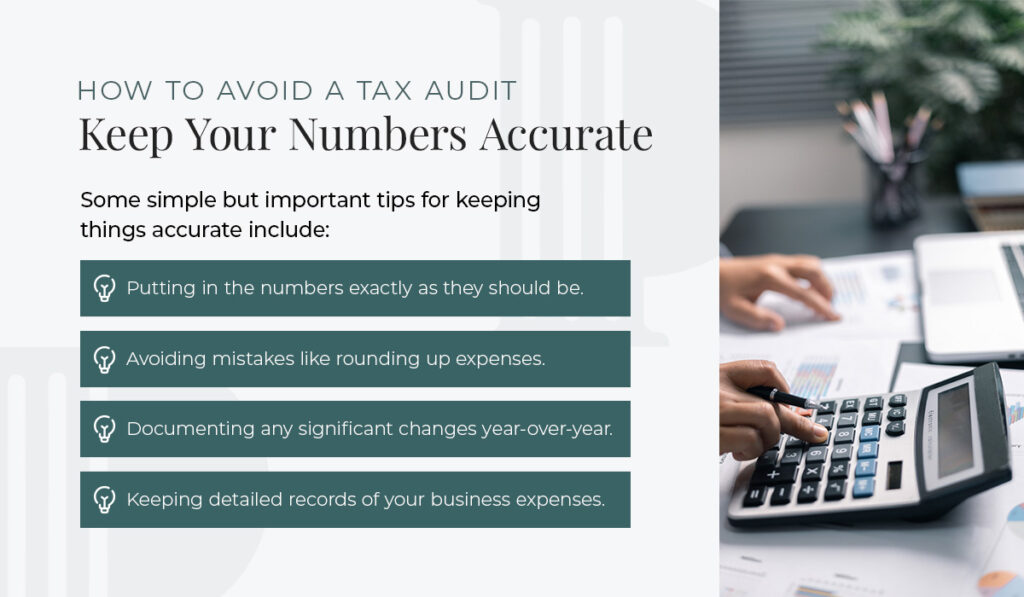
Accuracy is essential when filing your taxes. Take the time to make sure the numbers match, even if you have a tax accountant prepare your return. No matter who prepares your tax return, you’re the person responsible for what it says. Some simple but important tips for keeping things accurate include:
Avoiding mathematical mistakes on your expenses is crucial. Be sure you accurately report all income throughout the year, including freelance work. Those who underreport their income will likely have to pay back taxes or incur other penalties and interest on the taxes they already owe.
Ditch the paper return and file your tax return online. Filing a paper tax return means that you’re more likely to make a mistake. Simple mistakes like a missing page, math errors or empty boxes not filled in can trigger an audit. With automation reducing human error in business, why not embrace it for filing taxes?
Avoiding an IRS audit can involve adopting faster, more agile solutions. While a human eye is always the best final proof, making use of anything that’s accurate and helps you navigate a new tax season is a plus.
You may be surprised by how often people forget to file their taxes on time. Cutting it too close to the deadline can mean rushing through paperwork, increasing the risk of errors. The best time to file taxes to avoid an audit is between mid- to late February and early March. This point is neatly after you have all income and tax documents, but there’s less seasonal rush.
Having documents like Form W-2 and Form 1099-S ready ensures accuracy without the pressure of immediate filing.
You should track your deductions throughout the year and keep documentation as proof. It’s important to claim sensibly, especially if you’re exploring ways to avoid being audited by the IRS. Claiming excessive or unwarranted amounts for home office deductions, such as all of your monthly rent, can put you at risk.
Only deduct the space you use for work and the expenses associated with your home office. Having extremely high deductions is likely to get noticed, especially if you’re claiming them for the first time.
Whether you’re trying to improve your tax planning and preparation process or facing a tax audit, reach out to a professional tax attorney. They’ll be there to handle your accounting, tax audit representation and resolution to ensure everything is done correctly.
Working with a tax resolution service can simplify the process for you. Your IRS tax relief specialist will contact the IRS on your behalf and perform a comprehensive analysis of your finances. Working with a skilled team that’s familiar with the IRS requirements and can mean fewer concerns, easier processes and support to prevent an audit in the future.
Being audited isn’t the end of the world. It’s all about who you choose to support you in the process. If you find out you’re being audited or want to work with a professional to prevent it in the future, don’t hesitate to ask for help! Tax preparation and planning can be stressful and confusing. But it doesn’t have to be that way.
At Polston Tax Resolution & Accounting, we can eliminate stress from dealing with taxes, fines, penalties and other financial issues. Our experienced and knowledgeable taxation professionals will fight for you across a wide range of services, including appeals, IRS account investigation, tax court representation and audit representation.
Call us nationwide at 844-841-9857 or contact us to schedule your free consultation today!