

Summary: This article provides a comprehensive guide to Florida sales and use tax for businesses. It outlines the state’s 6% sales tax, augmented by local discretionary surtaxes and explains use tax obligations for uncollected sales tax. The guide details how nexus is established through physical presence or an economic threshold of $100,000 in annual sales. It covers various taxable goods and limited services, including specific rates for mobile homes and amusement machines. Insights include numerous exemptions and annual sales tax holidays. The article also addresses compliance, registration, filing requirements and penalties for nonadherence.
Navigating Florida’s sales taxes can be daunting, especially if you sell across state lines. Compliance with the tax law is essential to avoiding fines. The Florida Department of Revenue (DOR) is the tax authority of the state. You’ll be remitting your sales taxes to them regularly by filing tax returns and making payments.
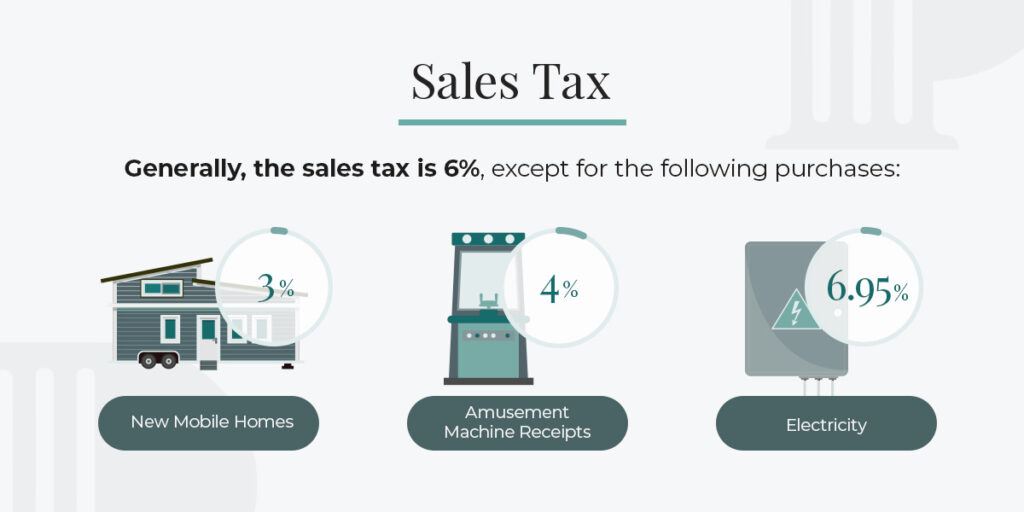
Sales tax in Florida is charged on taxable goods and services at the point of sale. Generally, the sales tax is 6%, except for the following purchases:
| Taxable Goods and Services | Sales Tax Rate |
| New mobile homes | 3% |
| Amusement machine receipts | 4% |
| Electricity | 6.95% |
The state charges use tax for purchases for which you have not paid sales tax, which is generally 6%. For instance, you may have purchased a taxable product outside Florida without paying the sales tax. As a business owner, you must report the use tax on your Sales and Use Tax Return.
Many goods and services are taxable in Florida. Examples of taxable products and services include:
Exemptions exist, such as general groceries, medical purchases and certain farming equipment.
Different counties and municipalities in Florida charge local and special district taxes, called discretionary sales surtaxes. These surtaxes go toward efforts, such as emergency fire rescue services and transportation systems. Sales surtaxes are updated annually, effective January 1. Only the first $5,000 of a taxable purchase is subject to the surtax for certain transactions.
Although the new law, indicated in Chapter 2025-208, did not include sales tax rate reductions, you can still take advantage of the many tax changes implemented. The new law is expected to garner $1.3 billion in tax savings.
The biggest change is that Florida no longer charges business rent taxes. Florida was the only state that taxed commercial leases, and the new law eliminates sales tax on commercial property rentals.
On top of these changes, a governing board that imposed a discretionary sales surtax can reduce or repeal the rate to any rate the law allows, starting October 1 of the fourth year the surtax has been charged. This change applies to open-ended surtaxes, not those with specified expiration dates.
Your business must collect and remit sales taxes in Florida if you:
You’ll typically trigger a nexus by establishing a physical location in the state or selling a high-dollar amount of products. Business owners who generally collect and remit sales taxes include retailers, service providers and auctioneers. Some business owners know sales tax as Florida’s retail tax.
Use taxes are often the responsibility of consumers and serve as a back up when business owners fail to charge sales taxes. Consumers must report and pay the use tax using the form DR-15MO.
A sales tax nexus is a connection between your business and the state that triggers the need to collect sales tax. Before the age of the internet, a Florida sales tax nexus usually occurred when a business had a physical presence in the state, such as an office or a retail store. Nowadays, businesses can also have nexus through economic and virtual connections. In these instances, the DOR can require the business to collect, file and remit sales tax.
If you trigger a nexus, you must register your business with the state and begin collecting and remitting sales taxes. Noncompliance can cause penalties, interest fees and a DOR audit.
You can register for a Florida sales tax permit online through the DOR. Provide your business information, including the business name, address, contact information, federal employer identification number and start of operations. You’ll also need a general idea of your products and pricing, and how much of it is taxable. You’ll need to update the DOR for any changes in your business information. If you ever change your legal entity or change ownership of the business, you must submit a new registration.
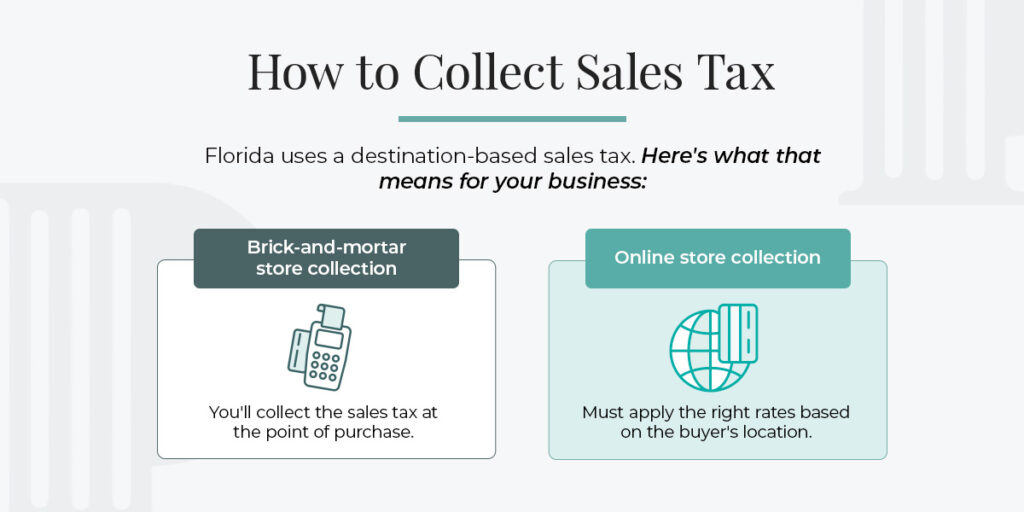
Collecting sales and use tax depends on how you make your sales. Determine the correct rates, list them properly on receipts and keep careful records. Florida uses a destination-based sales tax. Here’s what that means for your business:
Customers must see what they’re paying for — highlight Florida sales taxes on each invoice, receipt, sales slip or other evidence of a sale. You can merge or separate sales tax and discretionary sales surtaxes. Some industries, including alcoholic beverages, amusement machines, concession stands and vending machines, can use effective tax rates and rate divisors where it might be impractical to separately state the sales tax.
Use the state’s rounding algorithm when calculating sales tax. Calculate your tax to the third decimal place. If this third decimal place is greater than four, round up to the next cent. You can apply this algorithm to the aggregate of the amount for all taxable items on an invoice, or you can apply it to the taxable amount on individual items.
Florida’s sales tax may apply to shipping and handling services, such as delivery, freight and postage. They’re often taxable when included in the sale price of a taxable tangible property. Charges are exempt if a purchaser can pick up an item or arrange the delivery themselves, provided you list the charge separately on the bill of sale. You can usually collect shipping and handling taxes through your POS or online storefront settings.
Many products are exempt from sales taxes, with some examples including:
Certain entities, such as government agencies and some nonprofits, are exempt from paying sales taxes. You must not charge them this rate when they purchase from your business. If you’re purchasing goods you plan to resell, you’re also exempt from the sales tax. You need to apply for the Florida Annual Resale Certificate for Sales Tax to get the exemption, while consumers must have the Consumer’s Certificate of Exemption.
Annual Resale Certificates expire annually on December 31. Registered, active businesses will be issued new ones. If you file electronically, you must print out your own certificate. If you file paper returns, you’ll receive the new one in the mail.
Validate the exemptions or resale certificates per transaction and keep copies for potential audits. Failing to provide a certificate during an audit may lead to interest and penalties on the associated sales tax.
Florida has sales tax holidays, during which specific products do not incur sales or use tax. Holidays vary each fiscal year. They often promote goals, such as energy efficiency, improved safety or better education. The exemptions give your business the incentive to purchase items that enhance your operations.
Holidays can occur over a weekend or extend across an entire year. In 2026, there are currently two sales tax holidays:
| Sales Tax Holiday | Date Applicable |
| Back-to-School | July 20-Aug. 20, 2026 |
| Hunting, Fishing and Camping | Sept. 1-Dec. 31, 2026 |
During these holidays, the purchase of qualifying products, such as school supplies and camping equipment that meet pricing requirements, is exempt from sales tax. However, rental and repair of such products are not exempted. The exemption during the Hunting, Fishing and Camping Tax Holiday also does not apply to purchases for theme parks, entertainment complexes, airports and public lodging establishments.
The camping and fishing supplies covered during the Hunting, Fishing and Camping Tax Holiday have the following pricing caps:
You’ll generally report sales taxes in the Sales and Use Tax Return. You may file and pay them electronically or on paper. Businesses that get paid at least $5,000 in sales and use tax during the prior fiscal year must file and pay the tax return electronically during the next calendar year, beginning with the January tax return. Failing to file electronically incurs a $20 penalty — $10 for failing to file and another $10 for failing to pay. Other penalties may still apply.
Sales and use tax returns are due on the first day of the month following the reporting period, but aren’t considered late until the 20th. For instance, if your return and payment are due each month and you’ve made a January sale, then you must file and pay by February 1. If your deadlines are quarterly, then your return and payment are due April 1.
Filing frequencies depend on your annual sales tax collections:
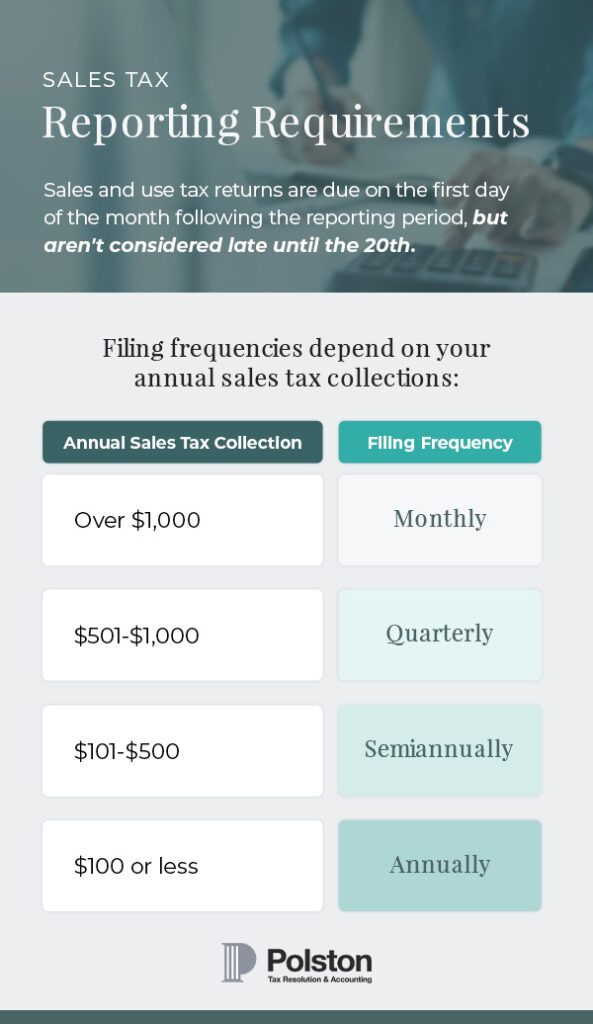
| Annual Sales Tax Collection | Filing Frequency |
| Over $1,000 | Monthly |
| 501-1,000 | Quarterly |
| 101-500 | Semiannually |
| $100 or less | Annually |
You must file the return even if no tax is due. If you file paper returns and the 20th falls on a weekend or a state or federal holiday, your return and payment will still be considered timely if it gets delivered the first business day after the 20th.
Late filing penalties cost 10% of the tax owed, with a minimum of $50. You may also incur interest according to floating interest rates. In contrast, filing and paying on time enables you to deduct 2.5% of the first $1,200 of tax due, up to $30 for each reporting location. Working with professionals ensures you file and pay taxes on time, while taking advantage of applicable exemptions.
If you do not collect sales and use tax, you may be responsible for paying the uncollected amount out of your own funds. Businesses that have not been contacted by the DOR about tax liabilities may use Florida’s voluntary disclosure program, which can help reduce tax obligations by waiving penalties.
Should the DOR audit your business, you could be charged with interest and fines alongside the sales tax you owe. You’ll also need to pay for legal fees. Florida uses a floating interest rate on late payments. In 2026, the floating interest rate is 11%.
Staying compliant requires vigilance. Some of the ways you might fail to comply include failing to:
These activities can result in a warning letter from the DOR. You’ll need to resolve your tax obligations before the specified deadline or risk an audit. If you continue to avoid your tax liability, the state can take legal action, such as issuing liens on business assets or filing criminal charges.
The Florida DOR conducts audits on businesses it suspects of underreporting and underpaying sales and use taxes. An audit notice will let you know when the audit will occur. It’s best to work with a professional in sales tax law when preparing for the audit. Tax professionals can minimize risk and ensure everyone follows proper procedure. Skilled sales tax attorneys investigate accounts, help you make critical decisions and represent you well throughout the process.
The scope of the process can vary widely, but business tax audits typically follow a similar pattern. After contacting your tax attorney, you will give the Florida DOR a signed power of attorney form, which allows them to discuss the audit with your tax professional and have your lawyer present during the audit.
Your auditor will inform you of the required records, such as tax returns, purchase and sales journals and resale certificates. In Florida, the lookback period is typically three years, so keep records for at least that long. The more organized your records are, the smoother the process.
Auditors usually conduct audits at your business. The audit itself can take time, depending on the amount and complexity of your records. Most businesses can expect the process to take a few days to about a week, during which the auditor will review your federal income tax return to reconcile your sales tax return and other accounting records. You will then have some time to gather any requested documents and schedule follow-up meetings, if needed.
Once finished, your auditor will notify you of their findings and discuss any taxes due or clarify information. You can also hold an audit conference if you disagree with the findings.
Polston Tax has been helping clients resolve taxes they owe and navigate IRS and state audits since 2001. As a company that works with the IRS every day, we’ve dealt with many cases and have developed different strategies to help clients pursue effective negotiations. When you work with us, you’ll be backed by a team of professionals, including tax attorneys, case managers, accountants and tax preparers. We’ll help you resolve your tax issues and get you an affordable resolution.
Our team has extensive knowledge of the tax laws that apply to your specific business. Our different services cater to each unique challenge, whether you need audit representation, tax preparation or tax debt resolution. We’ll completely take over your case and handle all IRS communications. With the help of our team, you can enjoy the peace of mind that comes with working with trusted professionals.
Navigating sales taxes in Florida, especially with larger sales, requires meticulous recordkeeping and organization. You don’t want to miss out on exemptions and lose significant savings. That said, you’ll also want to avoid underpaying, which leads to penalties and interest. Our tax resolution and accounting services are just what you need to successfully navigate your tax obligations.
We offer tax resolution services that deliver measurable results. We’ll assist you with audits and help you relieve yourself of taxes you owe. Working with taxes is our company’s sole focus. You won’t need to navigate the requirement complexities and the evolving tax regulations on your own. Contact us for a free consultation today to get started.