


Summary: This article provides a comprehensive guide to Texas sales and use tax for businesses. It outlines the state’s 6.25% sales tax rate, which combines with local taxes for a maximum of 8.25%, and clarifies its origin-based application. The guide details use tax obligations and how nexus is established through physical presence or an economic threshold of $500,000 in annual sales. It covers various taxable goods and services, including digital goods and certain services, alongside specific taxes on hotel occupancy, alcohol, and tobacco. Insights include numerous exemptions and annual sales tax holidays, emphasizing the importance of proper registration, timely filing, and record-keeping to avoid penalties and ensure compliance.
Sales tax compliance can feel like navigating a maze. As a business owner, you know that one misstep, be it miscalculating a local rate, missing a filing deadline or overlooking a new exemption, can trigger penalties. The rules are complex, and they change. That’s why you need clear information and guidance.
With a clear, step-by-step roadmap to Texas sales tax compliance, you can learn the essential rates, dates and rules needed to confidently manage your obligations and protect your business from costly mistakes and penalties. Whether you’re just starting out or refining your process, the information ahead will help you stay on the right side of the law.
Understanding what the Texas sales tax is starts with knowing the core numbers:
These figures form the foundation of your compliance responsibilities. Local rates vary by jurisdiction, so verify the exact rate for each location where you conduct business or deliver goods.
Your obligation to collect sales and use tax hinges on the concept of nexus. Nexus means you have a sufficient connection to Texas that triggers a legal requirement to collect and remit sales tax. This connection typically falls into two categories:
You have physical nexus if your business maintains an office, warehouse or retail location in the state. It also applies if you employ staff in Texas, store inventory within state borders or regularly send salespeople to meet with clients within the state.
Nexus can be triggered economically, even if your business has no physical connection to the state. If your business generates over $500,000 in sales in Texas over the previous 12-month period, you’re required to register, collect and remit sales tax. It can be complicated to determine your nexus and tax obligations, especially if you operate across multiple states.
State tax law distinguishes between taxable goods and services, exempt items, and sales that qualify for specific exemptions. Knowing the difference protects you from overcollecting or undercollecting sales tax from your customer base.
If you’re a retailer, service provider or auctioneer operating in Texas, you’ll likely have to collect and remit sales tax. Businesses that lease out properties, vehicles and equipment must remit sales tax, too.
Most tangible personal property sold in Texas is taxable, including retail goods, equipment, furniture and electronics. Certain services are also taxable, with commonly taxed services including:
Texas exempts several categories from sales tax, such as most unprepared grocery items, prescription medications and over-the-counter drugs. Many professional services, such as legal services, accounting and consulting, are not subject to sales tax either.
Certain buyers and transactions are exempt from sales tax regardless of what’s being sold:
When a customer claims an exemption, you must collect and retain proper documentation to support the nontaxable sale.
As tax law evolves, staying current is essential. Effective September 2025, House Bill 4226 created new motor vehicle sales tax exemptions for nonprofit food banks and certain housing service providers.
Additionally, Senate Bill 2206 eliminated the sales tax exemption for research and development equipment effective January 1, 2026, replacing it with an enhanced franchise tax credit of 8.722%, up from 5%.
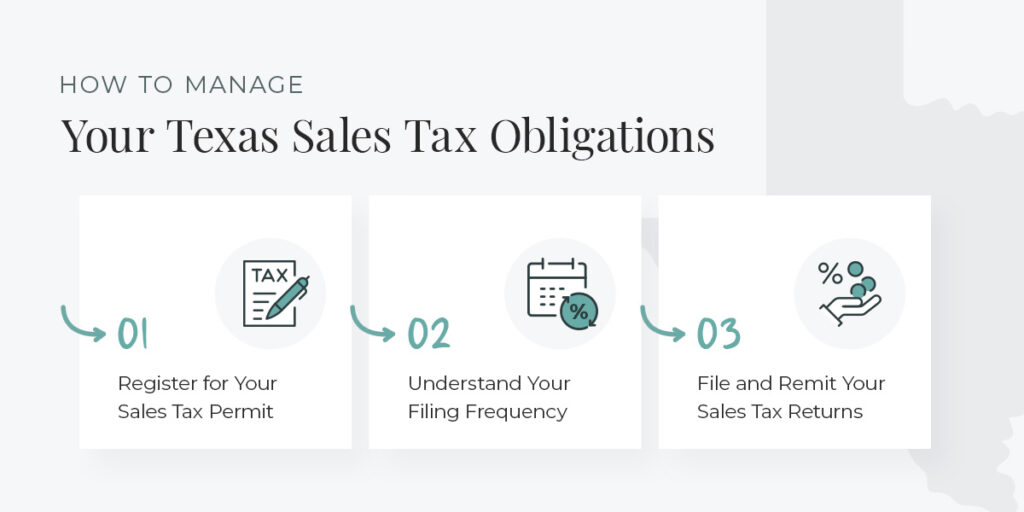
Compliance requires specific actions at specific times to stay current with the state comptroller.
Before you collect your first dollar of sales tax, you must register with the state comptroller and obtain a sales tax permit. To apply for a sales tax permit in Texas, you can complete the application online through the comptroller’s website. You’ll need your federal employer identification number, business structure details and an estimate of your expected monthly sales.
If you’re purchasing goods for resale, you’ll also need to know how to complete a resale certificate in Texas. This certificate allows you to buy inventory tax-free.
The Texas Comptroller assigns your filing frequency based on your anticipated tax liability. Most businesses file monthly, but some qualify for quarterly or annual filing. The comptroller determines your filing frequency based on your reported sales volume.
Your sales and use tax return is due on the 20th of the month following the end of your reporting period. The Texas Comptroller offers a discount of 0.5% if you file and pay on time, and 1.25% if you file and pay early.
Failure to file on time carries steep consequences. If you’re one to 30 days late, you’ll face a penalty of 5% of the tax owed. If you’re more than 30 days late, the penalty jumps to 10%.
Even diligent business owners make mistakes. Recognizing the most common errors can help you avoid them:
Partnering with a reliable tax accountant can help you catch these issues before they become problems. If you’re facing a sales tax audit because of a potential mistake, professional representation can make the difference between a manageable resolution and a crisis.
Polston Tax Resolution & Accounting has been helping business owners since 2001, guiding many through their state tax obligations. Our team of attorneys, accountants and tax professionals works collaboratively on every client matter, giving you a full support system.
We handle cases from start to finish and work with the Texas Comptroller and other state taxing entities every day. Our comprehensive small business tax and accounting services keep you compliant with the Texas tax code and focused on running your business.
Sales tax compliance doesn’t have to be a source of stress. Whether you’re dealing with nexus questions, filing frequency, exemptions or a sales tax issue that’s already surfaced, we’re here to help.
Schedule a consultation with Polston Tax today and get the professional guidance you need to protect your business.