
Summary: This article provides a guide to deducting business holiday party expenses. It clarifies that employee holiday parties and associated costs, including venue, catering, and entertainment, are generally 100% deductible as business expenses, distinguishing them from other, less deductible entertainment expenses. Key conditions for full deductibility include ensuring the event primarily benefits non-highly compensated employees and their families, and that expenses are considered ordinary and necessary. The article stresses that the party should not discriminate in favor of owners or highly compensated individuals. It also highlights the importance of meticulous record-keeping to substantiate claims, noting that these deductions were largely preserved despite changes from the Tax Cuts and Jobs Act.
Company holiday parties are often filled with exciting activities, such as games, catering and awards ceremonies. But the cherry on top is that, depending on certain factors, you can deduct 100% of the expenses to save on taxes.
Deductions depend on your guest list, expenses and documentation. Understanding these factors can help you perform more accurate tax calculations, avoiding penalties and audit concerns.
A company holiday party is 100% tax deductible if it consists of recreational or social activities primarily for certain employees. Certain employee meals are also 100% deductible.
To get the full 100% deduction, the party has to be mostly for your regular employees. It can’t favor:
These people can still come to the party. The rule is that they can’t be the main reason for it.

For tax year 2025, a highly compensated employee earns at least $160,000 (subject to a one-year lookback). The 100% deduction applies as long as you hold the events occasionally and spend a reasonable amount. Generally, Section 274 of the Internal Revenue Code (IRC) prohibits deductions for activities that fall under amusement, entertainment or recreation. Business meals are also only 50% deductible. However, qualifying holiday parties are an exception and remain 100% deductible.
The tax code does not specify applicable expenses, so you may include holiday decorations and other necessary expenses. However, the IRS prohibits deductions for any lavish or extravagant purchases.
If a business activity accompanies your holiday party, IRC Section 162 governs the deductions — the section states that you can deduct any ordinary and necessary business expense. If you’re having your holiday party at a resort, where you will also hold your annual planning meeting, travel and lodging expenses can be 100% deductible. However, IRC Section 274 overrides IRC Section 162, making certain event meals 50% deductible. You need to allocate costs for accurate deductions.
Your attendees are key to whether the company party is 100% deductible.
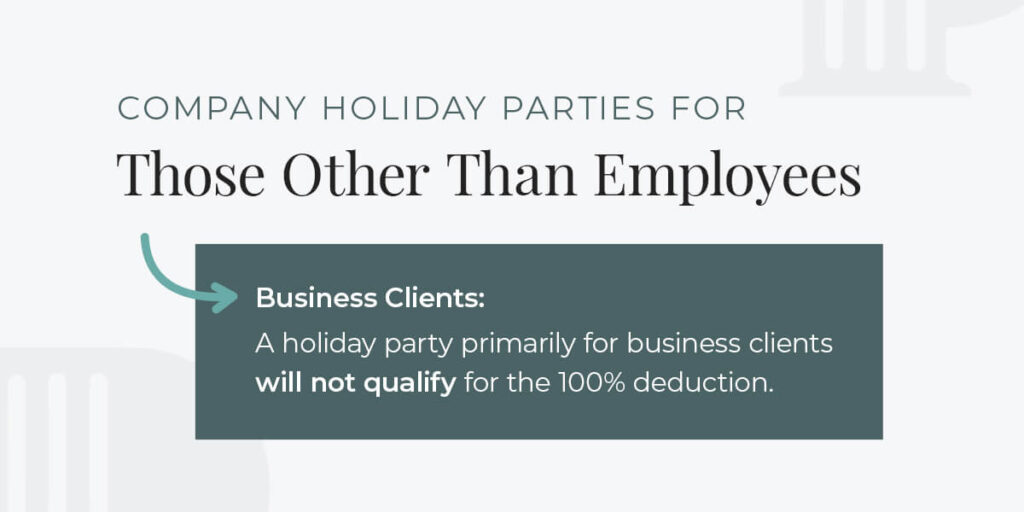
If your company’s holiday party consists of employees, owners, family members, business clients and independent contractors, you need to allocate costs. Calculate the costs you’ve spent on your employees — excluding the highly compensated ones — to identify where the 100% deductible applies. Everyone else can get the 50% deduction for the business meals.
Gifts that are part of the holiday celebration, such as goodie bags or party favors, can be 100% deductible. However, client or customer gifts are capped at a $25 deduction per year. Holiday bonuses don’t count as gifts, but they are deductible under IRC Section 162. Examples of holiday gifts can include a gift basket or a wine bottle.
Items with a company logo that cost less than $4 do not count as gifts and will not count toward the $25 limit. If you’re giving a company pen with a gift basket, you need to allocate the costs.
Team building events can be considered ordinary and necessary business expenses, making them 100% deductible. These activities can enhance employee collaboration, improve workplace productivity and boost morale.
Examples of 100% deductible expenses can include:
If your team building events come with recreational activities, or if you combine team building activities with your holiday party, allocate costs and use deduction terms from IRC Section 274 as needed.
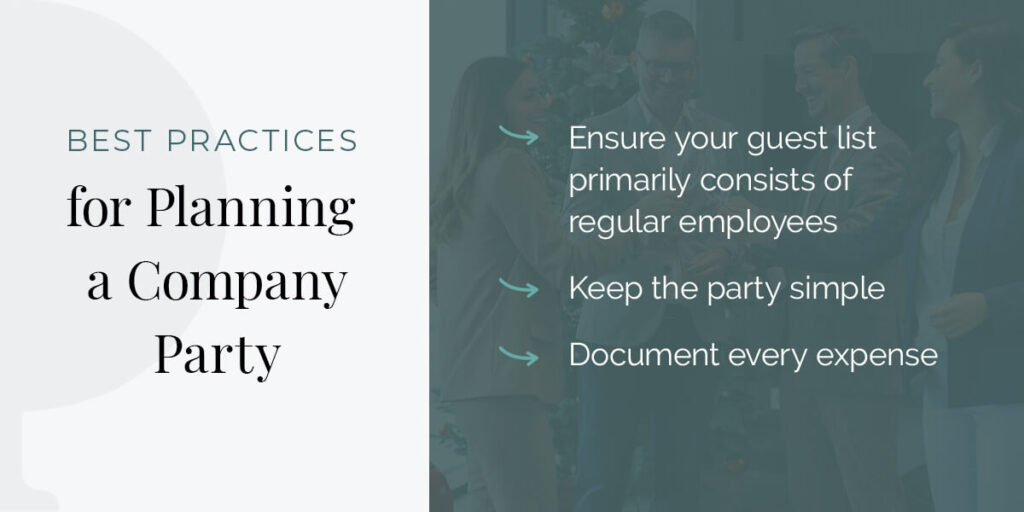
To avoid complications and potential noncompliance, consider these best practices when planning a company party:
At Polston Tax, we’re determined to help employers navigate their tax challenges. We have over 100 attorneys, certified public accountants, tax preparers, case managers and other professionals working with small and large businesses. With over a century of combined experience, we can offer you the assistance and tools you need to face the IRS.
We offer advanced tax services nationwide. With these services, we help businesses:
We understand that it’s tricky for businesses to navigate tax laws on their own, especially without an accounting team in-house. Business owners might not know how to file returns properly, and may even be paying more taxes than they need to. Polston Tax is here to help.
If you’re planning to hold a company holiday party, you can miss out on significant tax savings without performing proper deductions. You might also risk back taxes if you deduct more expenses than necessary. Our tax preparation services can help you avoid these circumstances.
At Polston Tax, we’ll completely take over your case and handle all IRS or state communications. We’ll negotiate on your behalf and help you resolve tax issues. You won’t need to determine whether or not you should make certain deductions on your own. With our tax knowledge and experience, we’ll help you reduce the taxes you pay.
Contact us for a free consultation today to get started.