
If you sell taxable goods or services in New York, then you need to identify the right rates to charge. However, it’s not as simple as charging one flat percentage. Rates shift depending on your product or service and delivery location. Incorrect payments can mean penalties, interest or an unwelcome audit down the road.
Sales of tangible personal property are typically subject to New York sales tax unless exempted. Services are generally exempt unless specifically taxable. Some exemptions need certifications. Knowing how it all works in the Empire State can help you file and pay on time while avoiding legal repercussions.
New York has a base tax rate of 4%. However, you need to account for local rates from cities, counties or school districts, plus the surcharge applicable to the Metropolitan Commuter Transportation District (MCTD). MCTD is composed of New York City and the surrounding counties of Nassau, Orange, Dutchess, Putnam, Suffolk, Rockland and Westchester. The MCTD surcharge is 0.375%.
The delivery jurisdiction typically sets the local rate, instead of your business location. The only exceptions are:
For instance, if you sell a $1,000 laptop at a Manhattan store, you’ll need to charge 4% for the base rate, 4.5% to account for New York City’s rate and 0.375% due to MCTD. The combined rate is 8.875% or $88.75 in tax.
The New York State Department of Taxation and Finance is the authoritative body responsible for the collection, filing and remittance of sales taxes in the state.
Not all businesses are required to collect New York sales tax. The requirement is triggered by a specific nexus, showcasing your business’s significant connection to the state. Generally, you must register as a sales tax vendor if you sell taxable property or services and meet at least one of the following:
Several nexus types can trigger the need for sales tax:
Physical nexus pertains to having enough tangible presence or activity in New York to require collection. Common triggers include:
Economic nexus involves passing the state’s revenue or transaction threshold, regardless of physical presence. Even businesses outside New York must register once cumulative gross receipts from sales of tangible personal property delivered into New York, taxable or exempt, exceed $500,000 and 100 transactions, both within the trailing four quarters. Review sales each quarter to check your total.
Once you cross the threshold, file a certificate of registration within 30 days. Collect sales taxes 20 days later. If sales fall below the threshold, you can file a final return, though you’re not required to deregister.
Marketplace platforms are responsible for collecting and remitting the sales tax that marketplace sellers charge for tangible personal property. However, you, as a marketplace seller, must still register and file periodic sales tax returns if you meet any of the sales tax registration requirements. A marketplace platform must also register if it has a physical presence in New York, or has made or facilitated more than $500,000 and 100 transactions into the state over four quarters.
In New York, the referral rule, or click-through rule, presumes you to be a vendor if you pay New York residents a referral commission and those sales exceed $10,000 over four quarters. It’s about referral relationships instead of direct sales. The mechanism has nothing to do with the $500,000 threshold.
Meanwhile, if you’re an out-of-state seller affiliated with a New York company owning more than 5% of you, or you own more than 5% of this company, and this company helps your business through market-building or brand presence, you trigger the affiliate nexus.
In New York, tangible personal property is generally taxable unless specifically exempt, while services are generally exempt unless specifically taxable. Some exemptions require a certificate, which you need within 90 days of delivery. Certain sales exempt from sales tax don’t require an exemption document, but for those that do, collect sales tax unless you’ve received the completed exemption document.
Examples of taxable tangible personal property include:
Examples of taxable services include:
Examples of exempted products and services include:
Knowing whether your products and services are taxable keeps you from over- or under-collecting.
You need to register with the tax department for a certificate of authority before making taxable sales in New York. You can register in simple steps:
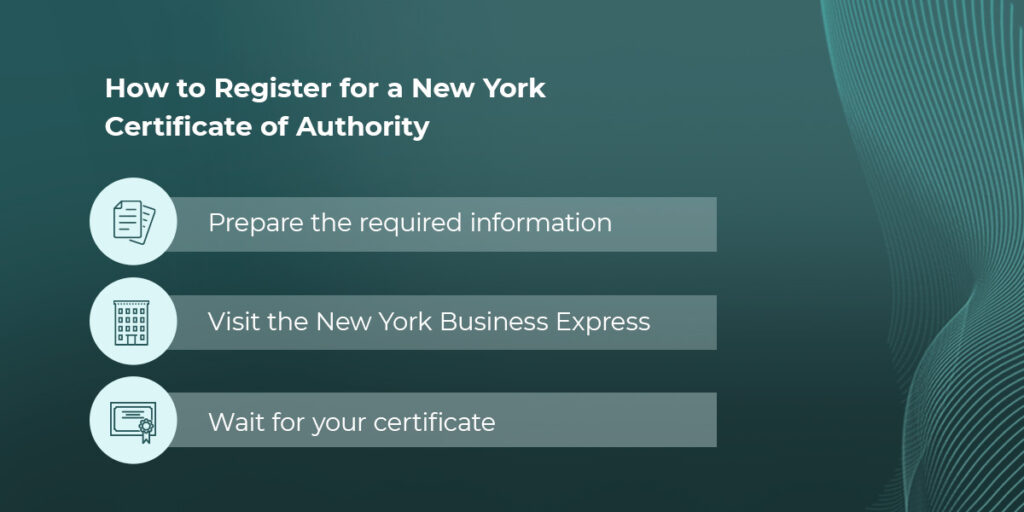
Operating without a valid certificate carries a penalty of up to $10,000. It runs up to $500 for the first day, plus up to $200 for each additional day.
New York assigns your sales tax filing frequency based on your sales volume and how much tax you owe:
If you are a distributor and have sold a total of 100,000 gallons or more of petroleum products, whether taxable or not, you’re considered a part-quarterly filer. Returns are generally due no later than 20 days after the period ends, and missing that deadline triggers penalties.
Most taxpayers are required to file their returns electronically through the Sales Tax Web File if they:
Polston Tax is a nationwide tax resolution and accounting service that can help you navigate sales tax requirements, whether you’re headquartered in New York or out of state. Founded in 2001, we bring you over 100 combined years of experience across our accountants, attorneys and agents. We’ve spent decades working with the IRS and state taxing entities, meaning we already know how to navigate different tax challenges. With different strategies on our toolbelt, we can help you regain your peace of mind and focus on your business operations instead.
Sales tax compliance gets complicated fast thanks to nexus, exemptions and filing deadlines. One misstep can turn into a costly audit for your business. Our comprehensive tax and accounting services can help you keep your finances in check, with records organized and forms properly filed.
We’ll help you determine what rates to charge and how much you owe. We’ll also prepare returns for you to ensure you won’t miss filing deadlines. If you’re due for an audit, take advantage of our sales tax representation services. We’ll guide you and defend you throughout the process and ensure that you’ll receive an accurate evaluation.
Schedule a free consultation today to get started.